


Hey there! As a supplier of electrolytic manganese dioxide, I often get asked about its solubility properties in different solvents. It's a pretty important topic, especially when you're looking at various applications for this versatile compound. So, I thought I'd dive into it and share some insights with you.
Let's start with the basics. Electrolytic manganese dioxide (EMD) is a high - purity form of manganese dioxide that's produced through an electrolytic process. It's widely used in many industries, from batteries to glass and ceramics, and even in the medical field. You can check out more about its applications here: Battery Application Electrolytic Manganese Dioxide, Glass Ceramic Colored Electrolytic Manganese Dioxide, and Medical Grade Electrolytic Manganese Dioxide.

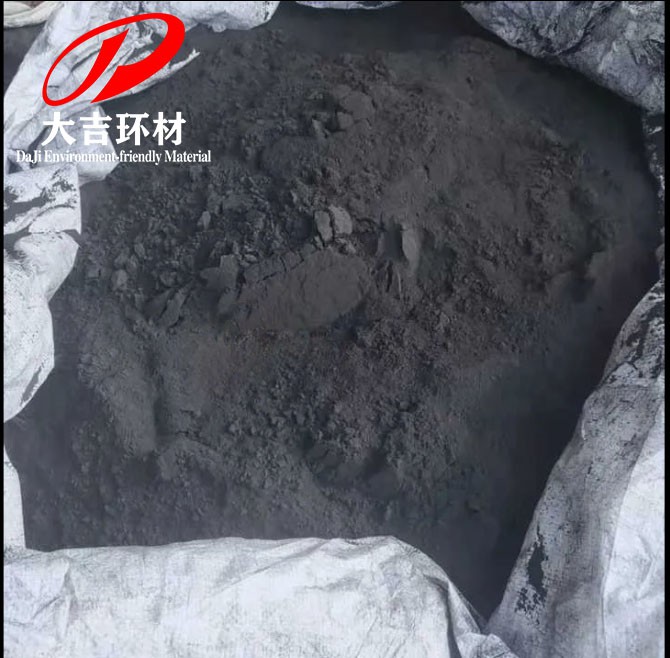
Solubility in Water
First up, water. EMD is generally considered to be insoluble in pure water. This is because of its chemical structure. Manganese dioxide has a relatively stable crystal lattice structure, and the forces holding the manganese and oxygen atoms together are strong. Water molecules aren't able to break these bonds and dissolve the compound effectively.
However, in the presence of certain substances, the situation changes. For example, if there are reducing agents in the water, they can react with EMD. Reducing agents donate electrons, and this can cause the manganese in EMD to change its oxidation state. When the oxidation state changes, the compound becomes more reactive and can start to dissolve. For instance, in an acidic solution with a reducing agent like hydrogen peroxide, EMD can react and dissolve. The reaction might look something like this:
MnO₂ + H₂O₂ + 2H⁺ → Mn²⁺ + 2H₂O + O₂
In this reaction, the manganese in EMD (MnO₂) is reduced from a +4 oxidation state to a +2 oxidation state, and the resulting Mn²⁺ ions dissolve in the water.
Solubility in Acidic Solvents
Acidic solvents are another story. EMD is quite reactive in acidic environments. In strong acids like hydrochloric acid (HCl) or sulfuric acid (H₂SO₄), EMD undergoes a redox reaction.
When EMD reacts with hydrochloric acid, it forms manganese(II) chloride, water, and chlorine gas:
MnO₂ + 4HCl → MnCl₂ + 2H₂O + Cl₂
The manganese in EMD is reduced from +4 to +2, and the chlorine in HCl is oxidized from - 1 to 0. This reaction is often used in the laboratory to produce chlorine gas.
In sulfuric acid, the reaction is a bit different. EMD reacts to form manganese(II) sulfate and water. The reaction is as follows:
2MnO₂ + 2H₂SO₄ → 2MnSO₄ + 2H₂O + O₂
The solubility of EMD in acidic solvents makes it useful in some industrial processes. For example, in the production of manganese salts, EMD can be dissolved in acid to form the corresponding manganese salts, which can then be further processed.
Solubility in Alkaline Solvents
In alkaline solvents, the solubility of EMD is also affected by redox reactions. However, the behavior is different compared to acidic solutions.
In a strong alkaline solution like sodium hydroxide (NaOH), EMD can react under certain conditions. For example, in the presence of an oxidizing agent, EMD can be oxidized to a higher oxidation state. But generally, EMD has a lower solubility in alkaline solutions compared to acidic ones.
One of the reactions that can occur in an alkaline environment is the oxidation of EMD to a more soluble manganese compound. If there's an oxidizing agent present, the manganese in EMD can be oxidized to a higher oxidation state, and the resulting compound may dissolve more readily. But this usually requires specific reaction conditions and the presence of appropriate oxidizing agents.
Solubility in Organic Solvents
When it comes to organic solvents, EMD is mostly insoluble. Organic solvents like ethanol, acetone, and toluene don't have the chemical properties to dissolve EMD. These solvents typically have non - polar or weakly polar molecules, and they can't break the ionic and covalent bonds in EMD.
The lack of solubility in organic solvents can be both a good and a bad thing. On the one hand, it means that EMD can be used in applications where it needs to remain stable in organic environments, such as in some organic - based battery electrolytes. On the other hand, it can be a challenge if you need to dissolve EMD in an organic medium for a specific process.
Why Solubility Matters
Understanding the solubility properties of EMD is crucial for different industries. In the battery industry, for example, the solubility of EMD in the electrolyte can affect the performance and lifespan of the battery. If EMD dissolves too readily, it can lead to a loss of active material and a decrease in the battery's capacity. On the other hand, a small amount of controlled solubility might be beneficial for promoting certain electrochemical reactions.
In the glass and ceramics industry, knowing how EMD behaves in different solvents helps in the production process. For example, the solubility in acidic solutions can be used to purify EMD or to incorporate it into the glass or ceramic matrix in a controlled way.
In the medical field, the solubility properties are important for understanding how EMD behaves in the body. Medical - grade EMD needs to be stable and have predictable solubility properties to ensure its safety and effectiveness.
Conclusion and Call to Action
So, as you can see, the solubility properties of electrolytic manganese dioxide in different solvents are complex and depend on many factors. These properties play a crucial role in its various applications.
If you're interested in using electrolytic manganese dioxide in your business, whether it's for batteries, glass and ceramics, or the medical field, I'd love to talk to you. We can discuss your specific requirements and how our high - quality EMD can meet them. Don't hesitate to reach out for more information and to start a procurement discussion.
References
- Bard, A. J., & Faulkner, L. R. (2001). Electrochemical Methods: Fundamentals and Applications. Wiley.
- Cotton, F. A., & Wilkinson, G. (1988). Advanced Inorganic Chemistry. Wiley - Interscience.
- Housecroft, C. E., & Sharpe, A. G. (2012). Inorganic Chemistry. Pearson Education.


